86 05926252889
 allie@hqmount.com





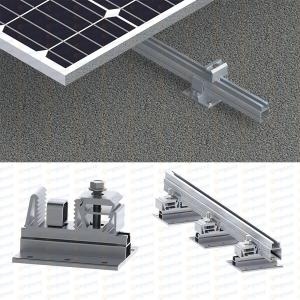
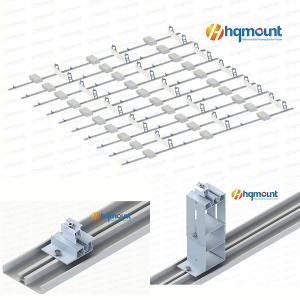
Penyelesaian Pemasangan Solar Bumbung Rata: Sistem Pelekat vs. Balast Berbanding
In the world of rooftop solar, the foundation is just as critical as the solar panels themselves.
As solar flat roof photovoltaic projects surge globally, selecting the optimal solar mounting system becomes a cornerstone of pv project success. Two prevalent but technologically distinct solutions dominate the market: non-penetrating adhesive systems, exemplified by Sika's SolarMount 1, and mechanical ballasted systems, like HQ Mount's BR6.
This article provides a deep technical analysis of both approaches, offering solar developers, pv EPC contractors, and photovoltaic engineers a clear framework for decision-making.
01 Technical Overview: System Architectures and Principles
The core challenge of flat roof PV installation is resisting decades of wind and snow loads without compromising the roof's structural and waterproof integrity.
Two main technological schools have emerged to address this.
The adhesive fixation approach is championed by the Sika Group's Sika SolarMount 1 solution. Its key innovation is a specially designed base that is directly bonded or welded to the roof's waterproofing membrane, often using a compatible adhesive or heat-welding for TPO/PVC roofs. This method aims to integrate the PV system with the roofing, promising superior waterproofing assurance.
The mechanical
solar ballast system
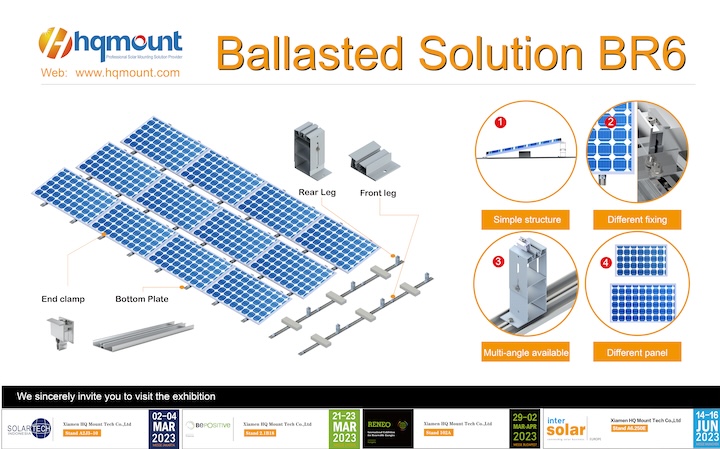
approach is represented by systems like HQ Mount's BR6. It employs the classic principle of physical ballasting, where integrated ballast trays support concrete blocks, using the system's own weight to counteract wind uplift. Its engineering intelligence lies in multi-functional components—like the
adjustable solar legs
and the aluminum plate—that combine support, angle adjustment, and ballast bearing into a single, streamlined system.
02 Core Dimensions: A Side-by-Side Comparison
To clearly illustrate the differences, the table below juxtaposes the two systems across key engineering dimensions:
|
Comparison Dimension
|
Sika SolarMount 1 (Adhesive-Bonded)
|
HQ Mount BR6 (Ballasted)
|
|
Installation Principle
|
Chemical Adhesion / Heat Welding. Uses specialized adhesive or thermal welding to attach solar mounts to the roofing membrane without penetration.
|
Mechanical Ballast. Pre-cast concrete blocks are placed on integrated trays; system stability relies on weight and friction.
|
|
Roof Impact
|
Non-penetrating, relies on bond integrity. No roof penetration, but long-term performance depends on adhesive/weathering resistance.
|
Non-penetrating, adds dead load. No waterproofing breach.
|
|
Wind Resistance Design
|
Relies on enlarged bonding area (e.g., with Sika SolarClick) to distribute and transfer wind loads into the roof deck.
|
Leverages system weight and low center of gravity. Optional wind deflectors/shelters can alter airflow to reduce uplift pressure.
|
|
System Characteristics
|
Highly integrated with specific roofing systems, creating a unified "waterproofing-PV" solution.
|
Independent, solar modular mechanical system. Highly adaptable, with features like 10° leg adjustability and compatibility for south-facing or east-west solar panel configurations.
|
|
Installation & Maintenance
|
Requires specialized bonding techniques. Maintenance or decommissioning may involve dealing with the adhesive layer.
|
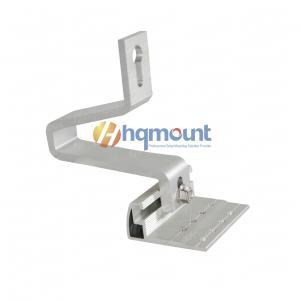
Generally faster, more flexible installation using T-bolts and
solar panel rapid clamps
. Ballast blocks are relatively easy to reposition.
|
03 A Critical Discussion: The Reliability of Ballasted Systems
The engineering community actively debates the reliability of pv ballasted systems. Authoritative guidelines note: "Ballasted roof equipment is not always reliable. From this perspective, structurally attached equipment is more dependable." This highlights the core concern: can reliance on friction and weight alone guarantee safety under extreme wind?
This isn't a dismissal of ballasted solutions but underscores their critical prerequisite: precise engineering and professional system design. A reliable solar mounting ballasted system must be rigorously calculated to ensure its anti-overturning and anti-sliding safety factors meet international standards (like ASCE 7) for the solar mounting project's specific maximum design wind load.
The design of the HQ Mount BR6 system addresses these challenges. Its integrated ballast plate and low-center-of-gravity structure enhance stability, while the adjustable support design allows for the optimization of the tilt angle and ballast weight to match precise load requirements. This system-level engineering philosophy is what transforms simple "weighted-down" racks into a reliable, engineered solution.
04 Application Scenarios and Decision Factors
The choice between systems ultimately depends on specific project conditions and priorities.
The Sika Adhesive-Bonded Solution may be optimal when:
The roof has a compatible single-ply membrane (like TPO/PVC) and waterproofing integrity is the paramount concern.
The building owner strictly prohibits any roof penetration or additional load.
The project seeks a single-source, integrated system warranty for both roofing and PV.
The HQ Mount BR6 Ballasted Solution shows distinct advantages for:
Existing concrete or steel-deck roofs with verified, sufficient load-bearing capacity.
Projects requiring solar rapid installation, layout flexibility, or future ease of expansion/relocation.
Situations demanding cost-effectiveness and broad adaptability, where site-specific wind loads can be precisely calculated.
The Practical Perspective
In real-world engineering,
photovoltaic ballasted systems
are widely valued for their stability and non-invasive nature, despite requiring careful planning for ballast logistics. Meanwhile, methods like direct structural attachment offer different trade-offs between cost and permanence.
Regardless of the chosen technology, a successful rooftop PV project begins with rigorous due diligence: verifying structural load capacity, reviewing wind load calculations or reports, assessing local environmental conditions, and considering long-term operation and maintenance.
In
flat roof solar
, there is no universal "best" solution—only the "most suitable" one, tailored to concrete project parameters. Understanding the engineering principles behind adhesive and ballasted systems allows for decisions that stand the test of time, beyond marketing claims.
If you are interested in the technical details, engineering calculations, or specific case studies for the HQ Mount BR6 system, please feel free to contact us at
info@hqmount.com.